The Tipping Point: Why the End of EV Subsidies is Actually a Good Sign
The age of the subsidy has passed, and the age of the advantage has begun. The infrastructure is ready, the TCO has tipped, and the path is clear. The only remaining question is how fast your organization can move to capture the value.
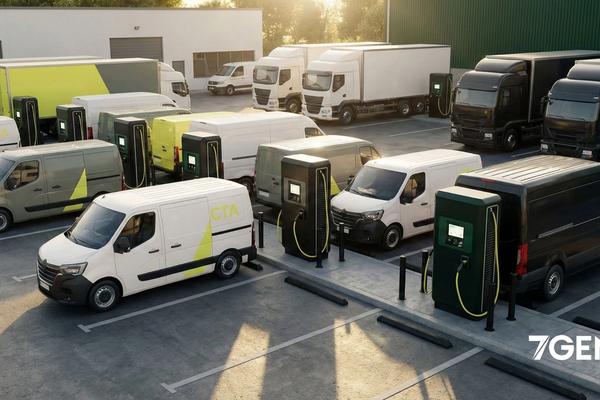
A fleet of electric vehicles ready to go
For years, the Canadian electric vehicle (EV) landscape was defined by the "carrot"—federal and provincial rebates like the iMHZEV program. These incentives were the necessary training wheels for an infant industry, designed to coax a hesitant market into a new era of mobility.
As we move through 2026, those training wheels are officially coming off. With the federal incentive programs reaching their conclusion, the narrative hasn’t shifted toward failure, but toward maturity. We are no longer asking if EVs can work; we are witnessing a market where they simply do.
From Subsidies to Structural Stability
The sunsetting of broad-based incentives is a confirmation of success. According to the CEO of 7Gen, Frans Tjallingii, the transition has evolved from a subsidized experiment into a stabilized industrial reality.
"Fleet electrification is a matter of when, not if," the CEO notes. "This Federal Budget sets a clear path forward to help future-proof investments in EVs."
The "path" is no longer paved with one-off rebates, but with robust structural frameworks that create a predictable operating environment. By providing carbon pricing certainty and "contracts for difference" (CCfDs), the government has signaled that the market for carbon credits is reliable. This allows companies to plan five- and ten-year capital expenditures with confidence, knowing that returns from zero-emission assets are now dependable.
Key pillars driving this new stability include:
- Stricter industrial carbon pricing and enhanced methane rules.
- Improved Clean Fuel Regulations (CFR) that increase market transparency.
- Expanded Investment Tax Credits for clean electricity and infrastructure.
The Inversion of the Economic Equation
The most profound shift is happening on the balance sheet. For a decade, sustainable fleet adoption was viewed as a "cost centre"—an expensive, green-coded line item that required government lifelines to stay afloat.
In 2026, that equation has officially inverted. The real "premium" on fossil fuels isn't just the price at the pump; it’s the cost of inaction.
"We see fossil fuel fleets fighting a profitability battle every day," says Tjallingii. "EVs have already tipped the Total Cost of Ownership (TCO) scales in most commercial segments."
Data now confirms that deploying capital into EVs is no longer about corporate social responsibility—it’s about immediate risk mitigation and securing a competitive advantage. As fuel prices fluctuate and carbon costs rise, the operational resilience of electric fleets has become a vital financial moat.
The Private Sector’s Turn to Lead
While Canada has "laid the tracks" at the federal level, the pace of the transition now rests squarely with the private sector. The global stage is moving fast—with countries like China already dominating EV manufacturing and battery supply chains. To remain competitive, Canadian businesses must stop waiting for the next mandate and start deploying capital at pace.
However, moving forward requires addressing the internal barriers that still linger within many organizations:
- Capital Realignment: Moving from Opex-heavy fuel budgets to Capex-heavy infrastructure investments.
- Talent Gaps: Developing the internal expertise required to manage a digital, electrified fleet.
- Organizational Inertia: Overcoming the "this is how we've always done it" mindset that prevents capturing new revenue streams.
The age of the subsidy has passed, and the age of the advantage has begun. The infrastructure is ready, the TCO has tipped, and the path is clear. The only remaining question is how fast your organization can move to capture the value.
Ready to Electrify Your Fleet?
Get expert guidance on transitioning to electric vehicles. Our team is ready to help.
Get a Quote