EV Fleet Charging: The Complete Guide to Deploying Charging Infrastructure for Commercial Fleets
Here’s what you need to know about planning, deploying, and managing a successful EV fleet charging program.
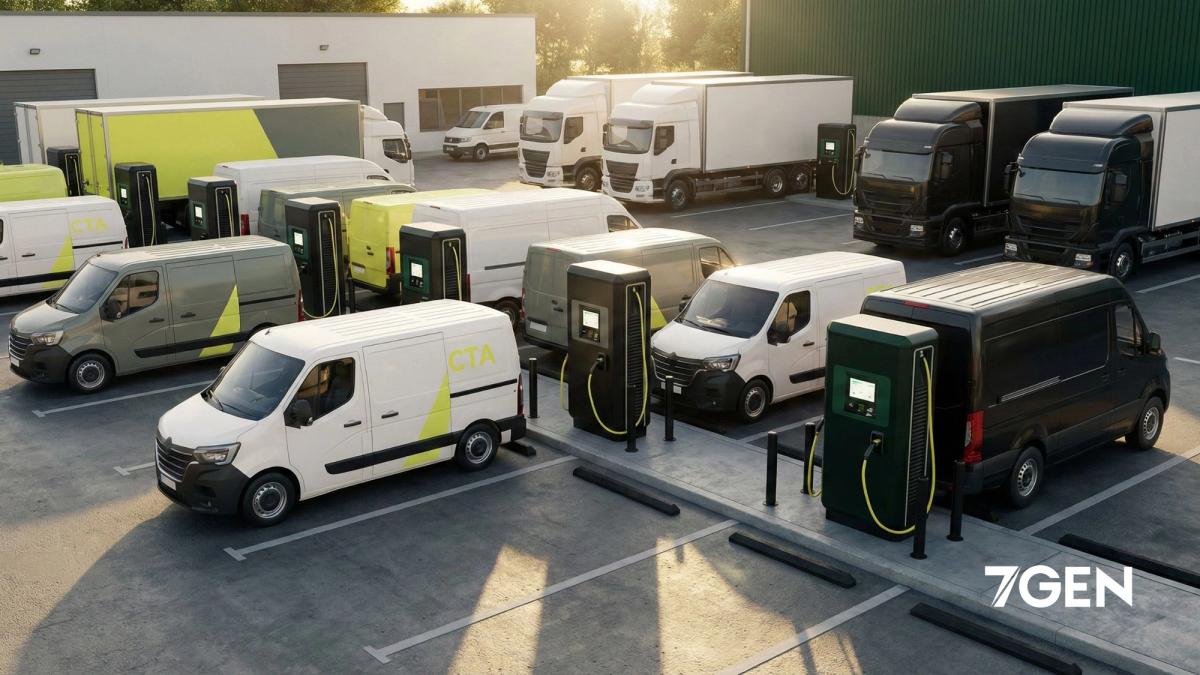
A fleet of commercial EVs charging
As fleet operators across North America accelerate their transition to electric vehicles, EV fleet charging infrastructure has become one of the most critical investments in modern logistics. Here’s what you need to know about planning, deploying, and managing a successful EV fleet charging program.
Why EV Fleet Charging Is the Backbone of Fleet Electrification
The shift from internal combustion engines to electric vehicles is no longer a question of if—it’s a question of how fast. For commercial fleet operators managing delivery vans, transit buses, and medium- to heavy-duty trucks, the answer increasingly hinges on one factor: reliable EV fleet charging infrastructure. Without the right charging stations, energy management systems, and deployment strategy in place, even the most ambitious electrification plans stall before they start.
Whether you operate a last-mile delivery fleet or a large regional depot, understanding how to design, build, and scale your EV fleet charging network is essential to reducing total cost of ownership, meeting emissions targets, and maintaining daily operational uptime.
What Is EV Fleet Charging and How Does It Differ from Public Charging?
EV fleet charging refers to dedicated charging infrastructure designed specifically for commercial and enterprise vehicle fleets. Unlike public charging stations found at retail locations or highway rest stops, fleet charging systems are engineered around operational schedules, vehicle duty cycles, and facility power capacity.
Fleet charging typically involves a mix of Level 2 chargers for overnight or extended-dwell charging and Level 3 DC fast chargers for rapid turnaround during shift changes. The key differentiator is that fleet charging must integrate with energy management software that balances electrical load across dozens—or even hundreds—of vehicles simultaneously, ensuring no single charging session overloads the facility’s grid connection.
Five Steps to a Successful EV Fleet Charging Deployment
Deploying EV fleet charging infrastructure is a multi-phase process that demands careful coordination between fleet managers, electrical engineers, utility providers, and technology vendors. Companies like 7Gen, a leading North American EV charging infrastructure provider, have distilled the process into five core stages.
Fleet analysis comes first. Before a single charger is installed, operators must understand their fleet’s operational requirements for electrification. This means mapping daily routes, vehicle dwell times, energy consumption per vehicle class, and the overall readiness of existing infrastructure. A thorough fleet analysis ensures that the charging solution is right-sized—neither over-built nor under-powered.
Engineering and concept design follows. This phase involves selecting the optimal mix of Level 2 and Level 3 EVSE (Electric Vehicle Supply Equipment), designing the electrical layout, and creating a project plan that accounts for permitting, utility coordination, and procurement timelines.
Construction and installation is where the physical work happens. Experienced deployment teams project-manage the full build-out, including civil and electrical works performed according to local codes, energizing and inspecting each charging station, and ensuring compliance with all regulatory requirements.
Software commissioning is the stage that separates a simple charger installation from a true fleet-grade charging system. EV charger-to-vehicle software interoperability must be validated, session monitoring configured, and dynamic energy management activated. This layer of intelligence is what allows fleet operators to optimize charging costs, track energy consumption, and generate carbon credit reporting.
Training, service, and ongoing support round out the deployment. Maintenance schedules, driver training programs, and service-level agreements ensure the infrastructure performs reliably for years to come.
Why Dynamic Energy Management Matters for EV Fleet Charging
One of the biggest technical challenges in EV fleet charging is managing electrical load. A depot with 40 or more vehicles plugging in simultaneously can easily overwhelm a facility’s electrical capacity, triggering costly demand charges or even service interruptions.
Dynamic energy management solves this problem by intelligently distributing available power across all connected vehicles based on priority, departure schedules, and real-time grid conditions. Rather than charging every vehicle at maximum speed, the system staggers and throttles sessions so that every vehicle reaches its target state of charge by its scheduled departure—without exceeding the site’s electrical limits. This approach can reduce infrastructure upgrade costs by 30–50% and significantly lower monthly electricity bills.
Real-World EV Fleet Charging in Action
The impact of well-planned EV fleet charging infrastructure is best illustrated through real deployments. In one large-scale depot charging project, a major logistics company needed to electrify three facilities across Calgary, Vancouver, and Montreal—each with significant electrical capacity constraints. The solution involved deploying 45 Level 2 and 3 Level 3 EV charger stations equipped with dynamic energy management, delivered within a 5–8 month timeline.
In another last-mile depot charging deployment, a fleet operator required charging infrastructure for mixed Class 2 through Class 7 trucks across hubs in British Columbia, Ontario, Quebec, and Florida. The project delivered more than 40 Level 2 and 13 Level 3 charger stations with intelligent load management in just 3–6 months. These case studies demonstrate that with the right partner and process, large-scale EV fleet charging rollouts can be executed efficiently, even under complex site and power constraints.
How to Choose the Right EV Fleet Charging Partner
Not all EV charging providers are equipped to handle the unique demands of fleet electrification. When evaluating partners for your EV fleet charging project, look for end-to-end capabilities that span the full project lifecycle—from initial fleet analysis through construction, software integration, and long-term support. A strong partner network with established relationships across OEMs, software vendors, and execution contractors is equally important for ensuring competitive pricing and efficient timelines.
Additionally, seek providers with proven experience in deploying carbon-friendly, incentivized technology solutions. Many federal and provincial programs in Canada and state-level programs in the U.S. offer significant funding for commercial EV fleet charging projects, and an experienced partner can help you navigate these incentives to offset upfront costs.
The Future of EV Fleet Charging Starts Now
EV fleet charging infrastructure is no longer a nice-to-have—it’s the foundation of every successful fleet electrification strategy. As vehicle technology advances and grid capacity expands, the organizations that invest in smart, scalable charging infrastructure today will have a decisive operational and competitive advantage tomorrow. Whether you’re electrifying your first depot or scaling across an entire continental network, the time to plan your EV fleet charging deployment is now.
Related reading: smart charging management software | generate revenue from your charging infrastructure | fleet telematics and data monitoring.
Ready to Electrify Your Fleet?
Get expert guidance on transitioning to electric vehicles. Our team is ready to help.
Get a Quote