Fleet Maintenance for Electric Vehicles: What Changes and What Gets Easier
Electric vehicle fleet maintenance is simpler and more predictable than maintaining ICE vehicles — but it works differently. This guide covers what changes when your fleet goes electric, the most common maintenance tasks and their true costs, how to build a preventive schedule, and how predictable maintenance costs improve fleet budgeting.
For Canadian fleet managers, fleet maintenance has always been one of the largest and least predictable operational costs. Oil changes, transmission services, exhaust repairs, and unplanned engine failures are costly in terms of maintenance and lost work, and can really add up across a fleet of ten, twenty, or fifty vehicles. Reducing vehicle downtime and keeping vehicles on the road is a constant pressure. Transitioning to electric vehicles changes this picture significantly. The vehicle maintenance schedule shrinks. Maintenance costs become more predictable. And the data available to fleet managers improves dramatically, making it easier to run a cost effective fleet maintenance program and avoid costly breakdowns.
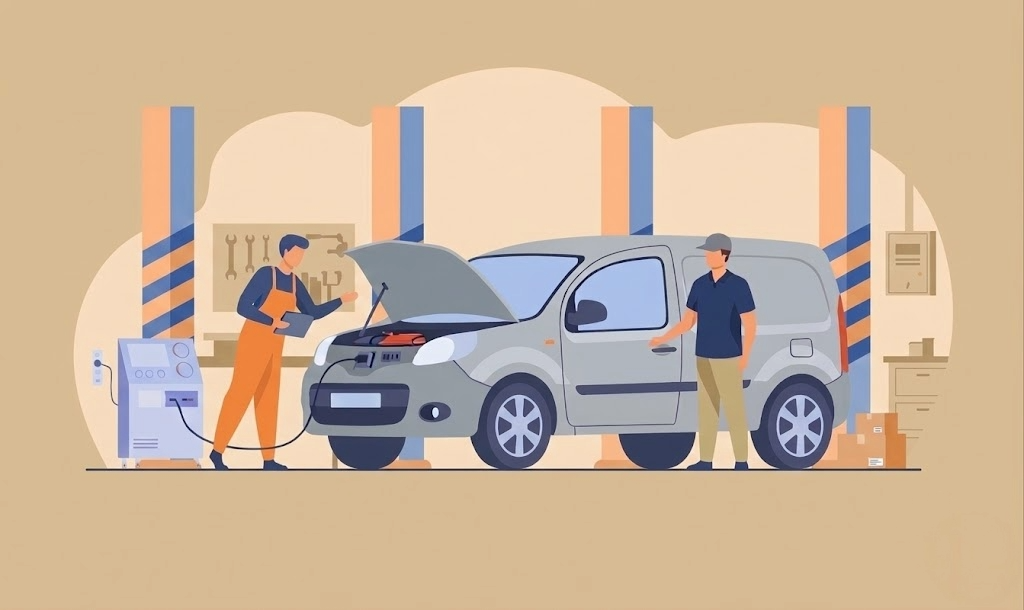
Electric vehicle fleet maintenance is significantly simpler than maintaining internal combustion vehicles. EVs have fewer moving parts, no oil changes, and reduced brake wear due to regenerative braking. Key maintenance focuses on battery health monitoring, tire management, and charging infrastructure upkeep, translating directly into lower costs and less unplanned downtime.
1. How EV Fleet Maintenance Differs from Traditional Vehicle Upkeep
The difference in fleet maintenance between EVs and ICE vehicles comes down to mechanical complexity. A conventional diesel van contains hundreds of moving parts: pistons, valves, a transmission, an exhaust system, a cooling system, and more. Each requires scheduled maintenance and eventually fails. Electric vehicles simplify most of that complexity by using just a motor, a battery pack, and a power control unit— which means fewer maintenance activities, lower repair costs, and well maintained vehicles that spend more time working than in the shop.
What disappears from the scheduled maintenance list:
- Oil and filter changes
- Transmission fluid services
- Spark plug replacements
- Exhaust system repairs
- Coolant flushes for the combustion system
- Timing belt or chain services
What remains or is added:
- Tire rotation and replacement (EVs are heavier and wear tires faster)
- Brake inspection (less frequent due to regenerative braking, but still required)
- Battery health monitoring
- Cabin air filter replacement
- Charging equipment inspection
- Software updates, which affect vehicle performance and range
Transport Canada's commercial vehicle maintenance regulations apply to electric commercial fleet vehicles the same as ICE equivalents. Regulatory requirements do not change with electrification — only the nature of the work does.
2. What Fleet Maintenance Management Looks Like in an Electric Fleet
Fleet maintenance management in an electric fleet operates differently from a traditional one. In a diesel or gas fleet, maintenance management is largely reactive: fleet vehicles are serviced at set intervals, and unexpected repairs happen without warning. Maintenance costs are hard to forecast because failure modes are unpredictable, and reducing downtime often means carrying spare vehicles or paying for emergency roadside assistance.
With electric fleet vehicles, each vehicle generates continuous data — battery state, motor temperature, charging cycle history, software status — that feeds directly into fleet maintenance management software. This enables predictive maintenance rather than reactive repair. Instead of discovering a problem when a vehicle goes off the road, fleet maintenance management teams receive actionable insights when battery health declines, when a charging session fails, or when telematics flag abnormal readings. Proactive maintenance driven by real data is what keeps fleet vehicles running smoothly and vehicle uptime high.
Good fleet management for an EV fleet includes:
- Automated reminders based on vehicle data rather than fixed calendar intervals
- Battery degradation tracking across the entire fleet
- Charging infrastructure health monitoring
- Maintenance costs tracked per vehicle, per route, and per site
- Integration with fleet management software for consolidated reporting
The result is that fleet maintenance management becomes a planning function rather than a firefighting one. Fleet managers spend less time reacting to unexpected breakdowns and more time using data driven decisions to reduce costs, minimize downtime, and keep the fleet running smoothly. Reducing downtime through preventative maintenance and predictive scheduling is the single highest-value capability a modern fleet management system delivers.
3. The Most Common EV Maintenance Tasks and Their True Costs
Understanding the actual maintenance workload for fleet vehicles helps fleet managers set realistic budgets and evaluate the true cost savings versus ICE equivalents. The goal is to control costs while keeping the entire fleet available and productive throughout the year.
Brake System and Regenerative Braking Servicing
Regenerative braking captures energy during deceleration, which means friction brakes are engaged far less than on a diesel or gas vehicle. EV brake pads last two to three times longer than those on equivalent ICE vans — which delivers clear repair cost savings and reduces costly breakdowns caused by worn brake systems. However, because friction brakes are used less frequently, rotor corrosion can become an issue in Canadian winters where road salt accelerates deterioration. Routine maintenance inspections should check for rotor corrosion alongside pad wear. The frequency and cost of brake work in a well maintained EV fleet is substantially lower than in a traditional vehicle maintenance program.
Battery Health Monitoring and Management
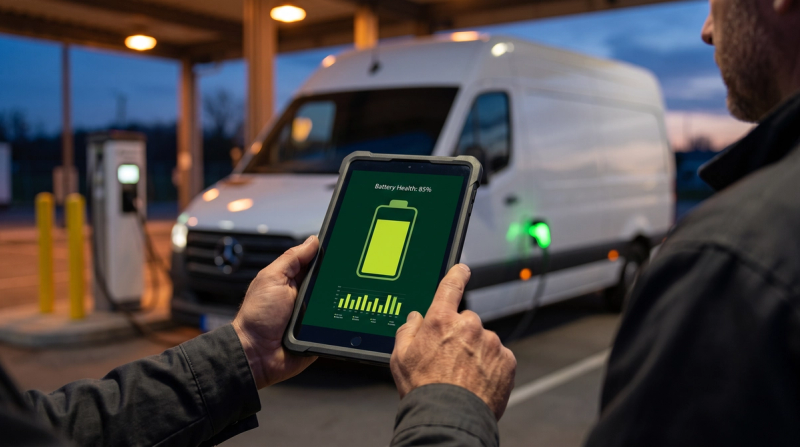
Battery health is the most important ongoing vehicle maintenance concern for electric vehicles. A battery degrading faster than expected affects vehicle range, reliability, and resale value. Active monitoring is essential to extend vehicle lifespan, maintain vehicle performance, and catch degradation early enough to schedule replacements before they cause vehicle downtime. Fleet maintenance management software tracks state of health across the entire fleet, flags cells showing abnormal degradation patterns, and provides actionable insights for proactive replacement scheduling. Following charging guidelines from the vehicle manufacturer and operating temperatures also helps extend vehicle lifespan significantly.
Charging Equipment and Infrastructure Upkeep
Charging infrastructure is a fleet vehicle maintenance responsibility with no equivalent in a diesel operation. Connectors, cables, charge management software, and the charging units themselves all require periodic maintenance activities and inspection. A charging unit that fails overnight removes a vehicle from service the next morning — the same operational impact as a mechanical breakdown, and just as damaging to fleet productivity. Proper fleet maintenance planning includes depot charging infrastructure in the maintenance program, with its own scheduled maintenance cycle and fault monitoring. Manufacturer recommendations for charger servicing intervals should be incorporated alongside vehicle maintenance schedules.
4. How Fleet Maintenance Software Supports Electric Vehicle Operations
Fleet maintenance software purpose-built for electric vehicles goes well beyond what traditional fleet management software offers. The best platforms integrate vehicle telematics, battery data, charging records, and maintenance history into a single operational view — giving fleet managers the actionable insights they need to control maintenance costs and minimize downtime across fleet operations.
Key capabilities that support EV fleet vehicle maintenance:
- Real-time fault detection. Electric vehicles generate diagnostic codes continuously. Fleet maintenance software surfaces faults immediately, allowing teams to address maintenance needs before a minor issue causes a costly breakdown.
- Predictive maintenance scheduling. By tracking charge cycles, depth of discharge, and temperature exposure over time, the platform identifies maintenance needs proactively and schedules preventive maintenance — removing the largest unpredictable costs from the repair budget.
- Charging session monitoring. Failed or incomplete charging sessions are logged automatically. Fleet maintenance management teams are alerted before a vehicle departs with insufficient charge for its route, reducing downtime and keeping vehicles running.
- Compliance recordkeeping. Fleet maintenance software generates documentation required for regulatory requirements and warranty claims. Automated reminders ensure no scheduled maintenance interval is missed.
- Cost tracking and analysis. Detailed maintenance costs data by vehicle, route, and depot gives managers the visibility to analyze trends, identify costly repairs before they escalate, and reduce costs over time.
5. Building a Preventive Maintenance Schedule for Your EV Fleet
A preventive maintenance schedule for electric vehicles is shorter than a traditional one, but the priorities are different. The goal is to reduce vehicle downtime, support battery health, keep charging infrastructure reliable, and ensure well maintained vehicles through every season. A good fleet maintenance program built on preventative maintenance is the most cost effective way to protect vehicle uptime and control costs.
Every 10,000–15,000 km or quarterly:
- Tire rotation and pressure check
- Brake inspection (pad wear and rotor corrosion check)
- Cabin air filter check
- Charging connector and cable inspection
- Software update verification
Every 30,000 km or annually:
- Full battery health diagnostic
- Suspension and steering inspection
- Battery thermal management system coolant check
- Full charging infrastructure inspection
As flagged by fleet maintenance software:
- Battery cell anomalies
- Charging session failures
- Fault codes from vehicle telematics
Maintenance schedules should be built around actual vehicle data rather than a generic template. Canadian fleets in colder provinces need to account for battery thermal load in winter months. Fleet size also affects scheduling — larger fleets benefit from staggered maintenance schedules to keep vehicles available at all times. Following manufacturer recommendations for service intervals ensures warranty coverage is maintained throughout the fleet maintenance program.
6. How Predictable Maintenance Costs Change Fleet Budgeting
One of the most significant practical benefits of EV fleet vehicles is how fleet maintenance costs behave. In a traditional fleet, budgeting for maintenance requires large contingency reserves because unexpected repairs arrive without warning. A transmission rebuild or engine failure can cost thousands and derail operational costs for the month.
Electric fleet vehicles remove the most unpredictable elements from the maintenance budget. There are no transmission services, no timing belt replacements, no combustion system repairs. What remains — tires, brakes, battery monitoring, and charging infrastructure upkeep — follows predictable patterns that fleet maintenance management software can model forward. This makes it easier to control costs, plan ahead, and keep the fleet running smoothly without unexpected breakdowns disrupting operations. Reducing downtime becomes a function of good preventative maintenance planning rather than luck.
For fleet managers building annual budgets, a well run EV fleet maintenance program means:
- Lower average fleet maintenance cost per vehicle per year
- Reduced repair costs and fewer costly breakdowns
- More accurate total cost of ownership modelling
- Better visibility into future maintenance costs by vehicle age and usage
- Improved fuel efficiency and vehicle performance through proactive maintenance
- A clearer business case for vehicle financing and fleet renewal
7Gen includes fleet maintenance as part of its all-inclusive monthly cost, so clients running electric vehicles never face unexpected repair bills. If you are planning a transition to EVs or want to understand how vehicle maintenance costs change at scale, explore 7Gen's fleet solutions or connect with the team to discuss your fleet maintenance program and specific maintenance needs.
→ Use our free TCO Calculator to compare EV vs. ICE fleet costs for your operation.
Ready to Electrify Your Fleet?
Get expert guidance on transitioning to electric vehicles. Our team is ready to help.
Get a Quote