Electric Vehicle Charger Installation for Canadian Commercial Fleets: What Fleet Managers Need to Know
Commercial EV charger installation is more complex than plugging in at home. This guide walks Canadian fleet managers through site assessments, permits, charger selection, and federal incentives so you can build a depot charging network that keeps your fleet moving.
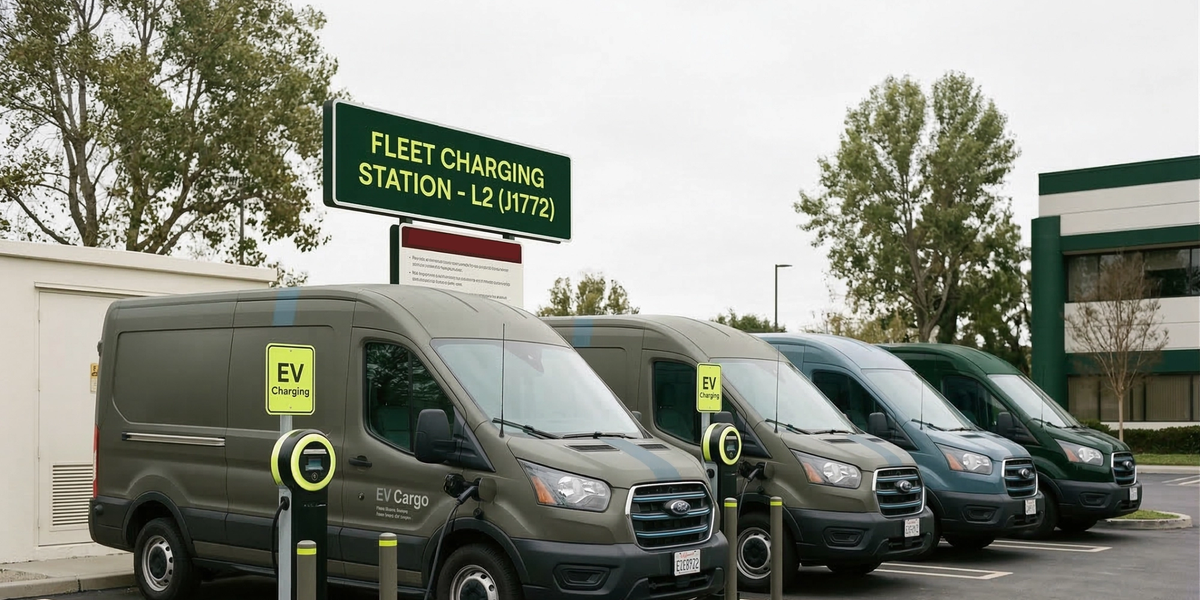
A fleet of electric cargo vans charges at a depot
Electrifying a commercial fleet starts on the ground, with reliable EV charging infrastructure at your depot. Electric vehicle charger installation for commercial fleets is more complex than a home EV charger installation, and fleet managers who plan it carefully avoid costly delays, panel upgrades, and downtime.
Commercial electric vehicle charger installation involves a site assessment, electrical capacity review, permit applications, equipment selection, and commissioning by a licensed electrical contractor. Fleet depots typically require Level 2 (7–19 kW) or DC fast chargers (50–150 kW), depending on dwell time and route length. Installation costs vary by site complexity, panel capacity, and number of charging stations required.
For a broader look at fleet electrification, see our guide on transitioning your commercial fleet to zero-emission vehicles.
1. Why Fleet Charging Infrastructure Is Different From Home EV Charger Installation
A home EV charging station installation typically means a licensed electrician connects a single Level 2 charger to an existing residential electrical panel. The process takes a few hours.
Commercial fleet charging is a different undertaking. A depot running 10 to 50 electric vehicles needs to charge multiple EVs overnight, manage peak demand charges, and maintain reliable uptime. The scope includes electrical panel upgrades, load management systems, and sometimes trenching or conduit work across a large parking area.
Key differences from home installation:
- Load scale: Fleet depots require far more power than any home installation can supply
- Demand management: Without an EV charging solution that staggers loads, simultaneous charging spikes utility costs
- Permitting: Commercial electric charging station installation requires municipal and utility approvals not needed for residential work
- Uptime: EV drivers at a commercial depot need reliable overnight charging — downtime affects operations directly
Understanding these factors helps fleet managers scope projects accurately and avoid underestimating installation costs.
2. Choosing the Right EV Charger Installer: What Qualifications and Certifications to Look For
Not every electrician is qualified for commercial EV charging work. When evaluating electric vehicle charger installers, look for:
- Licensed electrician or electrical contractor: All EV charger installation work in Canada must be performed under the applicable provincial electrical code by a licensed professional
- EV-specific training: Look for credentials through the Electric Vehicle Infrastructure Training Program (EVITP) or manufacturer certifications from brands like ChargePoint or SWTCH
- Commercial project references: Installing EV chargers at a fleet depot is not the same as a home EV charger installation. Ask for comparable commercial experience
- Utility coordination: Some sites need service upgrades requiring direct coordination with the local utility — your certified electrician should have handled this before
- ZEVIP familiarity: If applying for federal funding, your EV charging station installer should know the documentation and equipment eligibility requirements
Learn more about how 7Gen manages installation and charging infrastructure for Canadian fleets.
3. The Electric Vehicle Charger Installation Process: Site Assessment to Commissioning
Electrical Capacity Assessment and Load Management Planning
Before ordering any equipment, a qualified installer reviews your electrical panel capacity, available amperage, and whether your utility transformer can support the additional load from installing EV chargers across the depot.
For larger fleets, this assessment shapes the load management plan. Smart charging software staggers when each charger draws power, reducing peak demand and often eliminating the need for a costly panel or transformer upgrade. The Natural Resources Canada EV Charging Infrastructure for Canada study identifies load management as one of the most effective ways to reduce upfront EV charging infrastructure costs.
Permitting, Utility Approvals, and Provincial Electrical Code Compliance
Commercial electric charging station installation requires permits in every Canadian jurisdiction. The typical process includes:
- Building permit from the municipal authority
- Electrical permit reviewed under the provincial electrical code
- Utility approval for any service upgrade or new connection
- Final inspection and sign-off before the charging network goes live
Permit timelines in cities like Vancouver, Toronto, or Calgary can run several weeks. Plan for this before setting a go-live date.
4. Level 2 vs. DC Fast Charging Stations: Matching Charger Type to Fleet Operations
Level 2 chargers (7–19 kW) are the standard choice for fleet depots where vehicles return overnight. Overnight charging on Level 2 units fully recharges most commercial electric cars, vans, and trucks by morning. They are lower cost to purchase and install, and their power draw is manageable on standard electrical infrastructure.
DC fast chargers (50–150 kW) suit fleets with short layovers or mid-shift charging needs. They deliver a meaningful charge in under an hour using direct current, but installation costs are significantly higher and demand charges need to be factored into total cost of ownership.
Most Canadian depots benefit from a mix: Level 2 chargers for overnight charging across the fleet, and one or two fast chargers for vehicles that need a quick top-up during the day.
For guidance on ZEV adoption timelines, see Transport Canada's Zero Emission Vehicle resources. For how charger type affects long-term operating costs, read our post on EV fleet total cost of ownership in Canada.
5. Canadian Incentives That Reduce Commercial EV Charging Station Installation Costs
The Natural Resources Canada Zero Emission Vehicle Infrastructure Program (ZEVIP) is the primary federal funding source for commercial EV charging infrastructure. It covers a portion of eligible costs for purchasing and installing EV charging stations at workplaces, multi-unit residential buildings, and fleet facilities.
Key points for fleet managers:
- Funding applies to both Level 2 and DC fast charger installations
- Applications must be submitted before purchasing equipment or beginning electric vehicle charger installation work
- Funded chargers must meet smart charging technical requirements
- EV charger incentives vary by project type and province; check NRCan for current rates
Provincial programs including BC's CleanBC Go Electric rebates, Quebec's Roulez vert, and Ontario utility incentives can stack with ZEVIP for additional cost savings. See our full Canadian EV incentives guide for fleet operators for a province-by-province summary.
6. Managing a Multi-Site or Depot Charging Rollout Without Disrupting Fleet Uptime
Rolling out EV charging infrastructure across multiple sites requires careful sequencing to keep vehicles operational throughout.
Practical steps:
- Phase by priority: Start with your highest-utilization site and install EV chargers there first before expanding
- Assess sites independently: Electrical panel capacity, parking layout, and utility connections differ by location
- Future-proof conduit: Installing conduit and panel capacity now for chargers you will add later costs far less than retrofitting
- Start utility talks early: Service upgrades have long lead times — begin conversations months before your target date
- Train depot staff: EV drivers and yard managers need to understand the charging system to maintain uptime
For fleets managing vehicles across multiple regions, see our guide on managing a multi-province commercial EV fleet.
How Smart Charging Software Reduces Infrastructure Costs Across Sites
Power management software optimizes when and how fast each EV charges, preventing demand spikes and allowing a depot to serve more vehicles on the same electrical infrastructure. For multi-site operators, a centralized platform tracks charging status, energy costs, and session data across all locations — useful for cost allocation and sustainability reporting.
Solutions like those offered by 7Gen combine smart charging with full fleet management in a single EV charging solution, giving depot operators one view of vehicle readiness and energy costs without managing separate systems. Read more about what is included in 7Gen's all-inclusive fleet solution.
Getting Your Fleet's Charging Infrastructure Right
Commercial electric vehicle charger installation requires the right installer, a realistic plan, and early action on permits and funding. Fleet managers who start with a site assessment, engage a certified electrician with commercial EV experience, and submit ZEVIP applications before work begins are best positioned to bring their charging network online on time and on budget.
Working with a partner like 7Gen — whose all-inclusive EV-as-a-Service model covers charging infrastructure, energy management, and maintenance under one monthly cost — simplifies the entire process for Canadian fleets.
Ready to Electrify Your Fleet?
Get expert guidance on transitioning to electric vehicles. Our team is ready to help.
Get a Quote