EV Fleet Management Best Practices: How to Maximize Range, Battery Life, and Uptime
Electric vehicles are transforming commercial fleets across North America, but switching to EVs is only the first step.

Sticking to these EV best practices will make a difference for your business.
Electric vehicles are transforming commercial fleets across North America, but switching to EVs is only the first step. Effective fleet management requires drivers and operators to adopt new habits that protect battery health, extend range, and keep vehicles on the road. Here are the best practices every EV fleet manager should implement today.
What Is EV Fleet Management?
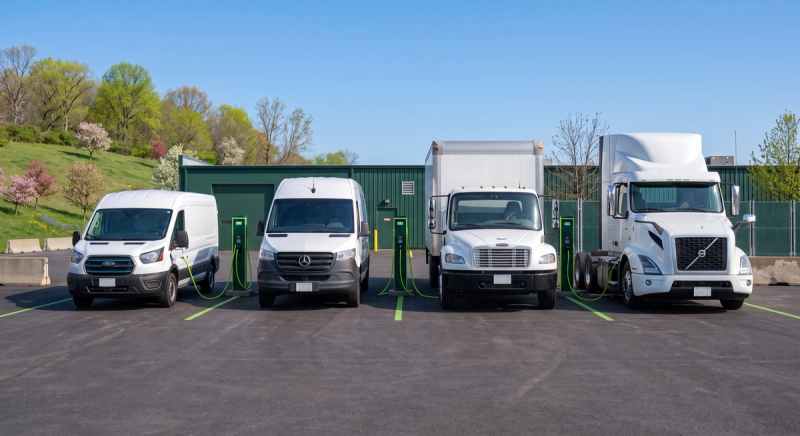
EV fleet management is the process of overseeing a group of electric vehicles to optimize performance, reduce operating costs, and minimize downtime. Unlike traditional fleet management, it involves monitoring state of charge (SOC), planning around charging infrastructure, and training drivers on energy-efficient habits. Whether you manage five delivery vans or five hundred long-haul trucks, these fundamentals apply.
Pre-Trip Planning Saves Time and Money
Every shift should start with a simple checklist. First, precondition the vehicle while it's still plugged in — this warms or cools the cabin using grid power instead of draining the battery. Second, check tire pressure, since low pressure reduces range. Third, review your SOC and confirm the route falls within expected range for the day. Finally, factor in terrain, payload, and weather, as cold temperatures and steep grades can significantly cut into mileage. Building this routine into your fleet management process prevents mid-route surprises and costly roadside assistance calls.
How to Maximize EV Range Across Your Fleet
Range anxiety is the number-one concern for fleet operators transitioning to electric. The good news is that driving behaviour has an enormous impact on how far each charge takes you. Train your drivers on these key techniques:
Regenerative braking and one-pedal driving recapture energy during deceleration and feed it back to the battery. Steady driving habits — avoiding hard acceleration and maintaining consistent speed — conserve energy far more effectively than aggressive driving. Minimizing HVAC use also makes a noticeable difference; seat and steering wheel heaters draw far less power than running the full cabin climate system. Smart route planning that accounts for elevation, payload, and weather rounds out a solid fleet management strategy for range optimization.
Protecting Battery Health for the Long Haul
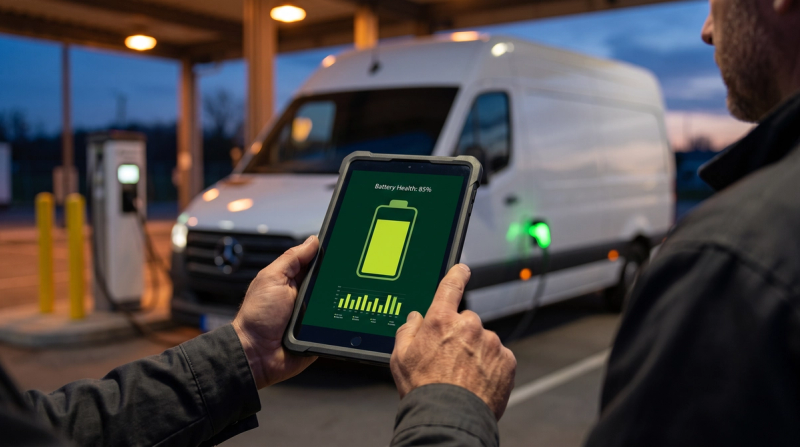
Battery replacement is one of the largest expenses in EV fleet management, so longevity matters. Keep the daily charge level between 20% and 80% to reduce battery stress, and use slower charging whenever the schedule allows — frequent fast charging generates excess heat that degrades cells over time. For vehicles in long-term storage, follow the manufacturer's recommendations and switch the 12-volt battery disconnect to off.
Charging Best Practices for Fleet Operations
Each EV model has a maximum charging speed, and the charging curve slows after roughly 80% SOC. Plan your fleet's charging windows around this reality. Always inspect cables and plugs for damage before use, confirm the session has started on the vehicle's dashboard, and return connectors to their holders after charging to prevent tripping hazards. A disciplined charging protocol is a cornerstone of safe, efficient fleet management.
The Bottom Line
Successful EV fleet management comes down to driver training, smart planning, and consistent maintenance habits. By preconditioning vehicles, coaching efficient driving techniques, and following sound charging practices, fleet operators can reduce costs, extend battery life, and keep their electric vehicles performing at their best — mile after mile. Learn more about essential EV fleet maintenance tips.
Related reading: understanding your EV batteries and telematics for smarter fleet decisions.
→ Compare EV range, cargo, and payload with our EV Range Comparison tool.
→ Use our free TCO Calculator to compare EV vs. ICE fleet costs for your operation.
Ready to Electrify Your Fleet?
Get expert guidance on transitioning to electric vehicles. Our team is ready to help.
Get a Quote