The Growing Dominance of EV Fleet Electrification & Leasing
EV sales have already surpassed gas vehicle sales in Europe. Now commercial fleets across North America are evolving quickly, with Canadian fleets at the helm of change. The eventual dominance of EV's is inevitable: EVs are a better, more efficient technology that can help reduce costs as much as they help reduce emissions. It is clear that for most transportation applications, EV will win out. If you are in the transportation industry, the sooner you can start saving money by moving to EV and the sooner you are geared towards the new operating reality of needing to charge, the better you’ll be able to compete in the future.
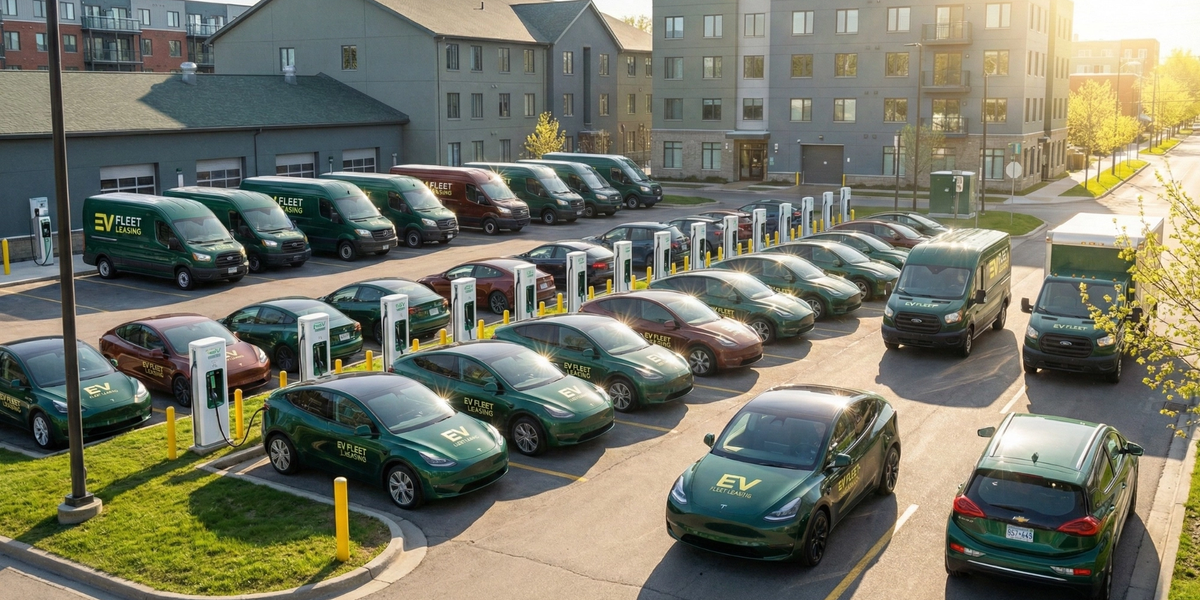
A fleet of electric vehicles is charged and ready for deployment in Canada.
EV sales have already surpassed gas vehicle sales in Europe. Now commercial fleets across North America are evolving quickly, with Canadian fleets at the helm of change. The eventual dominance of EV's is inevitable: EVs are a better, more efficient technology that can help reduce costs as much as they help reduce emissions. It is clear that for most transportation applications, EV will win out. If you are in the transportation industry, the sooner you can start saving money by moving to EV and the sooner you are geared towards the new operating reality of needing to charge, the better you’ll be able to compete in the future.
The question is no longer whether to electrify, but how to do it right.
7Gen has helped hundreds of customers with their fleet electrification needs, serving delivery fleets, school bus operators, logistics companies, and municipal services. And while the environmental benefits are well known, the number one reason by far that our customers go EV today is cost. The cost savings for operations for a fleet of any size are well documented.
Our model addresses the complex realities of commercial operations: predictable monthly costs, turnkey charging infrastructure, and ongoing support that keeps your vehicles on the road.
Key terms you’ll encounter in this article:
- EV (Electric Vehicle): Battery-powered vehicles replacing diesel or gasoline counterparts
- Fleet Electrification: The systematic transition of commercial vehicles from fossil fuels to electric power
- EV Fleet Management: A bundled model combining vehicle leasing, charging, software, carbon credits and support into one predictable payment
- Charging Infrastructure: The hardware, electrical systems, and software required to charge EVs at depots and en route
- Total Cost of Ownership (TCO): The complete cost of operating a vehicle over its lifetime, including acquisition, fuel, maintenance, and residual value
Why Commercial Fleets Are Moving to EVs
Depending on the size of your fleet, there are a number of things to consider when going electric. All of which, when chosen strategically, can make a considerable difference for your business, by increasing uptime and even creating new revenue streams with carbon credits. The initial downside is the higher up front cost (for now) and, very rarely, an earlier stage of technology. But if you are doing less than 150km/day and can charge overnight then, in Canada, it is financially very attractive to move to EV’s.
We’ve created an overview for fleet managers, operations leaders, and finance teams evaluating their next step toward zero emissions. Whether you’re exploring your first pilot or ready to scale across multiple depots, you’ll find practical frameworks for making decisions that stick.
1. Operational & Economic Drivers
Beyond environmental mandates, practical business realities are making EVs the logical choice for modern fleets:
- Operational Stability: Mitigates fuel price volatility, making long-term budgeting more predictable. Electricity offers more stable pricing.
- Driver Benefits: Quieter, smoother operation improves driver satisfaction and allows for late-night/early-morning deliveries in noise-sensitive residential areas.
- Urban Access: Helps fleets navigate new low-emission zones in major hubs like Toronto and Vancouver.
- Direct Savings: Energy costs are typically 50-70% lower than diesel, and simplified drivetrains significantly reduce maintenance downtime.
- Reduced Maintenance: With no oil changes, transmission repairs, or exhaust systems, maintenance is streamlined.
2. Commercial EV Specifications & Selection
Commercial electrification is vastly different from the consumer market, requiring a focus on real-world utility over advertised stats:
- Diverse Applications: Includes everything from last-mile cargo vans and medium-duty trucks to school buses and specialized yard tractors.
- Critical Specs: Fleet managers must prioritize usable range under load, payload capacity, charging speeds, and battery performance in harsh Canadian winters.
- The Leasing Advantage: Because EV technology evolves rapidly (improved density and software), leasing or EV-as-a-Service is often preferred over purchasing to avoid asset obsolescence.
Commercial fleet electrification is a different beast than the consumer market. While a Tesla might be the face of EVs, commercial managers need to focus on utility and specialized applications.
Key Vehicle Types
- Electric Cargo Vans: Built for last-mile delivery with payloads ranging from 1,500 to 4,000 lbs.
- Medium-Duty Electric Trucks: Class 4-6 vehicles designed for regional distribution and utility work.
- Electric School Buses: Purpose-built for student transport, often featuring V2G (vehicle-to-grid) capabilities.
- Electric Yard Tractors: Specialized equipment for ports and distribution centres.
Specifications That Matter
When evaluating a vehicle, look beyond the "brochure range" and focus on these critical metrics:
- Usable Range Under Load: Actual range when hauling cargo and running HVAC in varied terrain.
- Payload Capacity: How weight limits differ from traditional diesel counterparts.
- Charging Speed: The time required to get the vehicle back to operational readiness.
- Cold Weather Performance: Essential for Canadian winters, where battery efficiency can drop significantly.
3. Software, Operations, and TCO
TCO is the ultimate metric for fleet managers. Successful deployment relies on visibility and long-term cost modeling. While the upfront purchase price of an EV is higher, the complete financial picture over a 7–10 year lifespan often tells a different story.
- Software Insights: Real-time dashboards track vehicle status, automate charging schedules to avoid peak utility rates, and monitor CO₂ reductions.
- Comprehensive TCO: While EVs have higher upfront costs, the Total Cost of Ownership over 7–10 years is often much lower due to fuel/maintenance savings and carbon credit monetization.
- Charging Infrastructure: One-time capital expense plus ongoing maintenance.
- Support & Training: Includes specialized training for drivers (range management) and dispatchers (route optimization) to ensure the technology is used efficiently.
4. Strategic Execution & Scaling
Electrification is a journey that moves from data collection to full-scale regional deployment:
- The Pilot Phase: Starts with a small number of vehicles (e.g., 5-20) to validate technology and build an "operational playbook" before committing at scale.
- Change Management: Focuses on the "human" side of the transition, including driver engagement, mechanic upskilling, and internal communication.
- Regional Scaling: Accounts for varying grid conditions, provincial incentives, and climate differences (e.g., Vancouver vs. Winnipeg) as the fleet expands across depots.
EV Fleet Leasing & EV-as-a-Service with 7Gen
7Gen’s EV-as-a-service model fundamentally changes how fleets approach electrification. Instead of purchasing vehicles, building charging infrastructure, and managing multiple vendors, fleets access everything they need through a predictable monthly payment.
How It Differs from Traditional Purchasing
7Gen’s EV Fleet Management model fundamentally shifts the transition to electric fleets from a high-risk capital burden to a streamlined operational expense. Unlike the traditional approach, which requires a large upfront capital expenditure and leaves the owner to manage the risks of fuel spikes and vehicle downtime, 7Gen offers predictable monthly payments with lease-to-own options and built-in upgrade paths. Furthermore, while traditional purchasing forces businesses to juggle multiple vendors for vehicles, chargers, and software, which is a major drain on internal resources, 7Gen acts as a single integrated partner that provides ongoing operational support as part of the package.
Our integrated platform includes:
- Vehicle procurement and financing: Access to medium- and heavy-duty EVs matched to your operational requirements
- Charger design and installation: Complete depot infrastructure from site assessment to commissioning
- Operational support: Driver training, dispatcher training, and ongoing helpdesk
- Maintenance: Preventive and corrective maintenance programs
- Software and reporting: Fleet management dashboards, charge scheduling, and performance analytics
- Carbon credits and incentives: Management of available programs and credit monetization
Flexibility for Any Stage
Whether you’re ready to explore a pilot with 5-20 vehicles or scale to hundreds of units, 7Gen’s model adapts. Start small, learn from real operational data, and expand based on proven performance rather than projections.
7Gen operates across Canada and supports cross-border operations into the U.S. where applicable, with deep experience in medium- and heavy-duty fleet applications.
The First Step Towards Electrification
Ready to explore fleet electrification? Contact 7Gen for a complimentary assessment. Bring your route data, and we’ll show you what’s possible.
Ready to Electrify Your Fleet?
Get expert guidance on transitioning to electric vehicles. Our team is ready to help.
Get a Quote