Navigating the Commercial EV Landscape
Commercial electrification isn't just about sustainability; it’s about duty cycles, payload, and the total cost of operating.
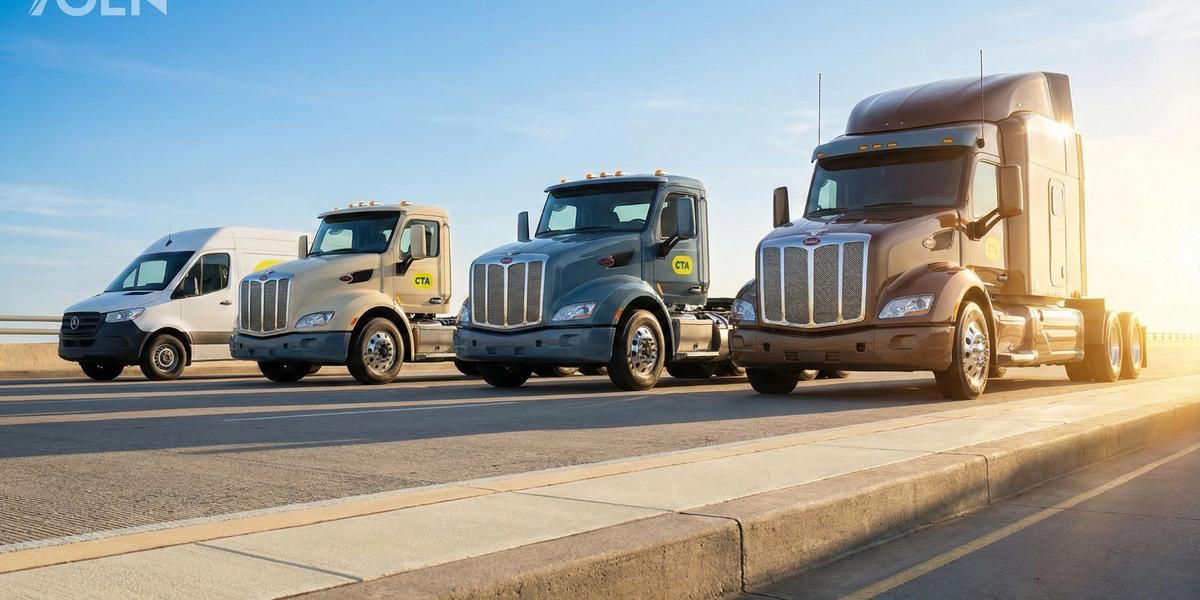
A fleet of commercial EV vehicles
Navigating the Commercial EV Landscape
If you’ve spent any time researching electric vehicles, you’ve likely been bombarded with reviews of sleek passenger sedans and high-tech SUVs. But for a fleet manager responsible for dozens, if not hundreds of vehicles, the technical specs are secondary to a more pressing question: Can this vehicle handle a full load on a -20°C Tuesday in Montreal?
Commercial electrification is an uptime-increasing, bottom-line-improving shift, but the specifications of your fleet’s needs come first. It’s not just about sustainability; it’s about duty cycles, payload, and the total cost of operating.
A Tool for Every Trade: Vehicle Categories
The 2026 commercial EV market has matured significantly, offering purpose-built solutions for distinct operational needs:
- Electric Cargo Vans: Models like the Mercedes eSprinter have become the backbone of last-mile delivery. With payloads reaching up to 4,000 lbs, they are optimized for urban routes where stop-and-go traffic allows regenerative braking to maximize efficiency.
- Medium-Duty Trucks (Class 4-6): These are the workhorses for regional food service and utility work. They bridge the gap between city vans and heavy haulers, often offering modular battery setups to balance weight and range.
- Electric School Buses: Leading the charge in many Canadian municipalities, these vehicles often utilize V2G (Vehicle-to-Grid) technology. This allows school districts to sell power back to the grid during peak demand hours while the buses are idle, turning a transport asset into a revenue generator.
- Electric Yard Tractors: Perhaps the highest ROI in the sector. Because these move heavy loads over short distances in ports and distribution centers, they eliminate the massive fuel waste associated with diesel idling.
Specifications That Actually Matter
When evaluating a commercial EV, the official brochure range is rarely the number you should bank on. To ensure operational reliability, look closer at these key specifications:
1. Usable Range Under Load
We don’t guess, we model. Our telematics and route analysis simulate load, terrain, climate, and duty cycle before deployment. We only lease EVs that are proven to meet your operational needs in your environment.
For real-world planning it's important to estimate conservatively to ensure you are prepared; an empty van’s range can vary from a fully loaded vehicle. That being said, even on a cold day under load, most vehicles available in today’s market deliver a minimum of 200 km, which already covers most daily routes for most businesses.
Even under load, the operating cost per km is significantly lower than an internal combustion engine (ICE). 7Gen customers see strong fuel and maintenance savings, without compromising route completion. We always build in a practical buffer based on real-world route data so customers complete 100% of routes reliably.
2. The Canadian Winter Factor
In Canada, and most of the north-eastern USA, cold weather is a primary spec. Low temperatures slow chemical reactions in the battery, and cabin heating draws significant power. While modern heat pumps have improved efficiency, expect a 30–40% range reduction during deep-freeze conditions. We design infrastructure around deployment schedules. Smart load management ensures every vehicle is fully charged from 0–100% overnight without overloading the system or delaying dispatch.
Pre-Programmed and automatic battery preconditioning before departure is the key. This warms the battery and vehicle up by drawing energy from the charger. A warm, plugged-in battery performs better and preserves range, simple but highly effective.
Our fleet partners operate through Canadian winters every year without disruption. With proper planning and the right vehicle selection, EVs consistently complete routes, even during deep freezes.
3. Payload vs. Battery Weight
Batteries are heavy. There’s no one-size-fits-all approach. We assess operational requirements (actual payload data, daily distance traveled, vehicle size and more) and match the right vehicle to the job. If weight or range requirements exceed EV limits, we recommend a more suitable vehicle. Most modern EV payload capacities meet our customers’ needs.
It is critical to compare the Gross Vehicle Weight Rating (GVWR) against your typical daily tonnage to ensure you aren't sacrificing too much cargo capacity for range. Our model removes guesswork and capital risk. We evaluate what’s on the market and deploy vehicles and charging infrastructure suited to your application, all in one monthly bill, whether last-mile, transport or trades, so you’re not stuck with the wrong assets.
4. Charging Speed and Throughput
For a fleet of 20+, charging isn't just about the plug; it’s about "turnaround time." If a vehicle needs to run a double shift, you require DC fast charging (DCFC) capabilities that can return a battery to 80% in under 45 minutes.
Overbuilding or underbuilding without load studies is one of the most common DCFC mistakes that fleets make. Charging must be designed around duty cycles and power availability, not just charger speed.
Choose a financing bundle for both vehicles and infrastructure to benefit from a predictable operating expense. That shifts charging procurement, installation and upkeep from a large capital burden into a managed operational solution that drives fuel savings immediately. We include the chargers, the installation, the design, the project management, the software, 24/7 support, maintenance and carbon credit management and monetization in our monthly bill.
Choose an EV fleet management partner who understands where you envision your business in the near-term. Design scalable infrastructure from day one: conduit capacity, power planning, and smart energy management, so fleets can expand without ripping everything out in five years.
Strategic Resilience
Understanding these nuances is what separates a successful pilot from a failed deployment. By focusing on real-world specs rather than consumer hype, fleet managers can build a resilient, electrified operation that stands up to the rigours of commerce in cold-weather climates.
Ready to Electrify Your Fleet?
Get expert guidance on transitioning to electric vehicles. Our team is ready to help.
Get a Quote